
A real risk in Luxembourg
In Luxembourg, potentially harmful cyanobacterial blooms have been observed and documented regularly since the 1970s in the Upper-Sûre Lake. Due to its hydrographic characteristics and agricultural activities in its rural catchment area, the Upper-Sûre Lake is particularly vulnerable to these blooms.
Later, in the mid-2010s, other official bathing water sites such as the Remerschen ponds and Lake Weiswampach, Moselle River, were affected by cyanobacteria and have since been subject to risk monitoring like the Upper-Sûre Lake. Monitoring of the Moselle River, which is not an official bathing site, was also initiated during that period.
Did you know?
The first cyanobacteria blooms in the Upper-Sûre Lake were reported back in the early 1970s. These first observations were evidencing the gradual eutrophication of the lake since the construction of the dam in the late 1950s.
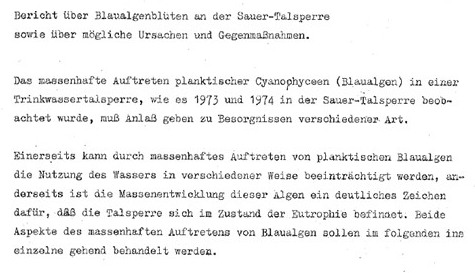
This article (Unknown source) highlights the presence of cyanobacteria (blue-green algae) in the drinking water reservoirs at the Esch-sur-Sûre dam in 1973 and 1974.
Implementation of a national risk management strategy
For nearly 20 years, the Water Management Authority (AGE) has mandated LIST to monitor cyanobacteria in the Upper Sûre Lake.
The European Bathing Water Quality Directive EC/2006/7, transposed into Grand Ducal law in 2009, lays the foundations for monitoring the risk associated with the harmful cyanobacteria in the country's official bathing areas. The water bodies in Remerschen and Weiswampach have therefore been included in the annual monitoring program since mid-2010.
Every year, LIST carries out a series of sampling and analysis campaigns from May to October and communicates its results to AGE, which then takes decisions in terms of beach access management.
Based on data collected between 2018 and 2021, a National Cyanobacteria Alert Plan has been developed to enable faster and more coordinated responses to potential risks. This plan, which was adjusted in 2022, has been in force since then.
Consult the official guidelines
Check the water quality of official bathing sites
To download the National Alert Plan in PDF format, click here.

A technological toolbox to help researchers
Between 2020 and 2022, LIST led the CYANOLUX project, a key initiative aimed at strengthening cyanobacteria monitoring through the implementation of a technological toolkit.
This project has enabled the testing and integration of innovative tools such as drones, sensors and rapid tests for in situ toxin measurement, with a view to improving the monitoring of official bathing sites. This toolkit has been deployed since then, and it continues to be developed at the Haute-Sûre Lake. Ultimately, it will be rolled out at other official bathing sites affected by cyanobacteria.